PC–002 · A thesis in progress
The Chapel
as Athanor
Raimondo di Sangro, Azoth,
and the transformation of the visitor.
The question at the threshold
What if the chapel’s materia prima
was the person who entered it?
At Sansevero, marble seems to become veil, flesh and net. Virtues, memorials and images of death share a carefully conceived setting. The museum reads its Virtues as stages toward interior knowledge; earlier scholars have also explored initiation and regeneration. [1]
My proposal brings three ideas together: the chapel sustains an encounter like the athanor sustains the Work; the visitor supplies the matter of an inward transformation; and Azoth names the mediation between apparently opposed states. This is a contemporary Hermetic reading, offered alongside the chapel’s Christian and familial meanings.
The chapel
Architecture holds attention.
The visitor
Perception becomes the subject.
Mercurius / Azoth
Opposites enter a relationship.
Six encounters · One proposed reading
A labyrinth of attention
Follow the encounters, or select one on the circle. Select a numbered station to change the diagram and enter that encounter.
01 / Concealment
The veil
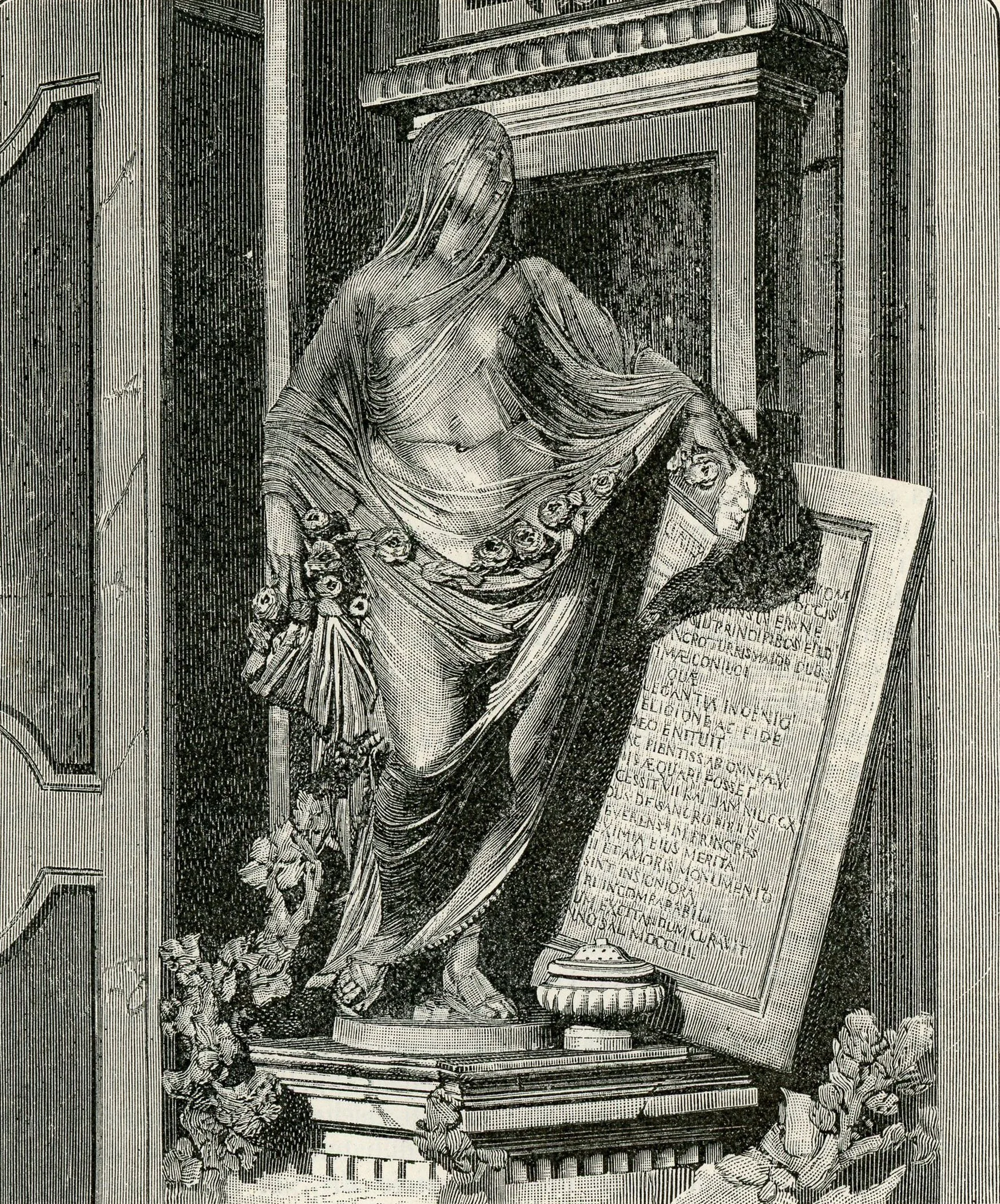
Pudicizia · Antonio Corradini, 1752
Public domain · Wikimedia Commons · Full credit

A memorial to Raimondo’s mother, Cecilia Gaetani dell’Aquila d’Aragona. Its funerary and moral meanings are the starting point. The museum also discusses veiled wisdom; other iconographic comparisons remain in play. [2]
The veil makes presence and concealment coexist. In this reading, the first change occurs in attention: one recognizes that what is visible may not exhaust what is there.
Appearance → awareness of mystery
02 / Liberation
The net
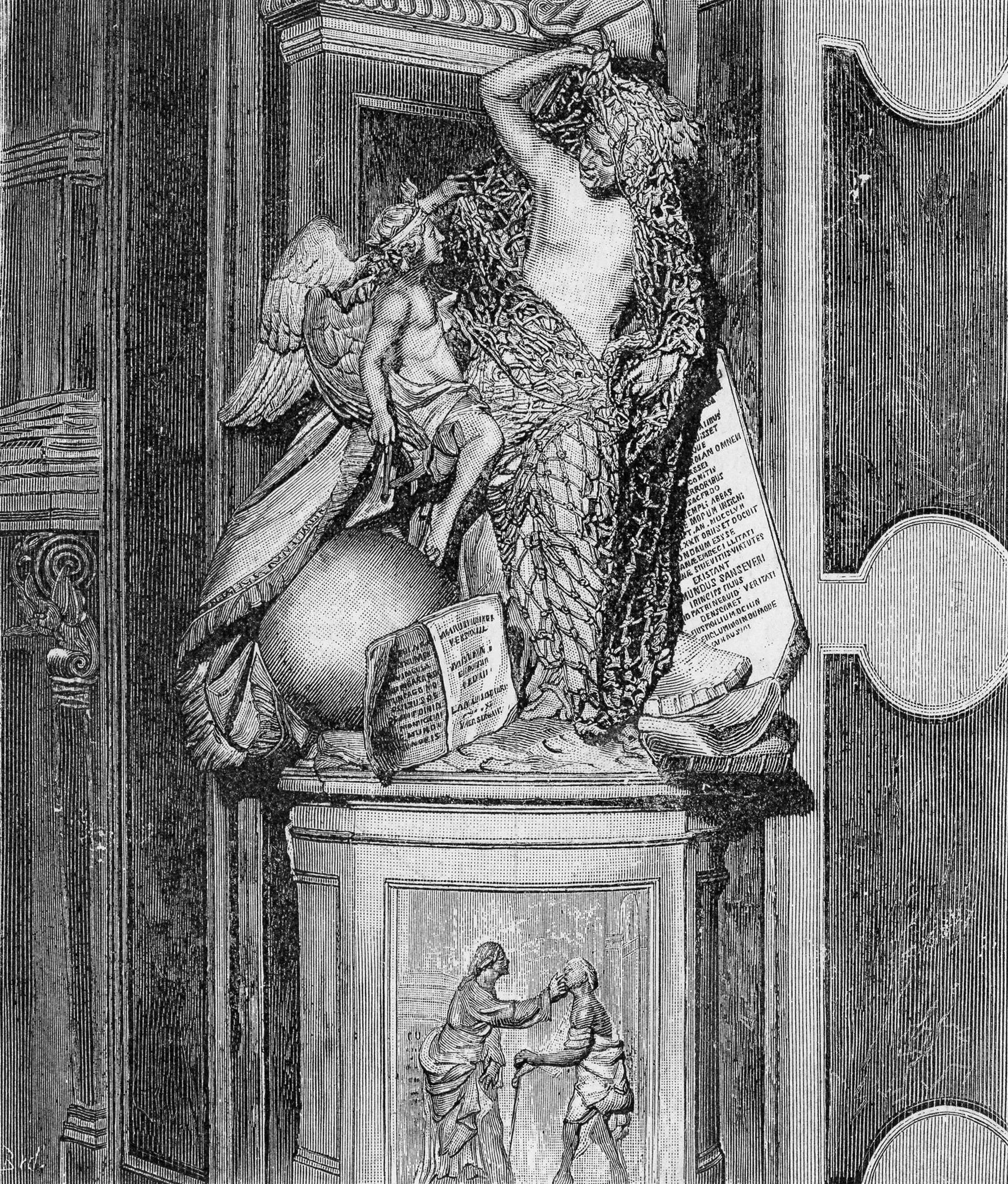
Disinganno · Francesco Queirolo, 1753–1754
Public domain · Wikimedia Commons · Full credit

Dedicated to Raimondo’s father, Antonio, the work presents release from worldly entanglement. Christian conversion and the recovery of sight are integral to its imagery. [3]
The net invites comparison with solve: loosening an established configuration so that another becomes possible. The sculpture depicts liberation; “dissolution” is the Hermetic analogy brought to it.
Entanglement → possibility of release
03 / Reorientation
The labyrinth
A motif of difficulty, continuity and return
The surviving pavement belongs to a repeating perspectival meander design. It does not establish a walkable maze leading to one center. The museum associates the labyrinth motif with the difficulty of knowledge. [4]
Our labyrinth is a model of reading: turning back, reconsidering, finding a different relation among familiar things. Progress may depend on returning to what we thought we understood.
Dispersion → reorientation
04 / The threshold of death
Stone, flesh, veil
Veiled Christ · Giuseppe Sanmartino, 1753
Marble remains marble.
Yet it seems to become
something else.
Christ’s death and anticipated resurrection provide the Christian foundation. Raimondo intended the sculpture for an underground chamber that remained unfinished in his lifetime. Its present setting cannot by itself establish his intended route. [5]
The appearance of softness in hard stone makes transformation palpable to the eye. Comparison with mortificatio—the death of a prior form—already has precedent in Sansevero scholarship. Here it opens a question about how the visitor’s own assumptions might change. [6]
An ending → the possibility of renewal
05 / Mediation
What passes between?
Sincerità, philosophical Mercury and Azoth
Sincerità holds a caduceus. Published readings already connect it with Mercury, guidance and the union of opposites. Azoth also appears in Pernety’s 1758 dictionary; its vocabulary predates Lévi. [7] [8]
My suggestion is to use Azoth relationally, across the ensemble: a name for mediation between concealment and revelation, bondage and freedom, death and renewal. Its role need not be confined to one emblem. This does not establish that Raimondo conceived a chapel-wide Azoth scheme.
Opposition → relationship
06 / Reintegration
The visitor returns
Transfiguration as a change in perception
The same threshold.
A different way of seeing.
In this reading, the Work’s “product” is a reconfigured relation to what one sees. The visitor leaves, yet the encounter can become the starting matter of another inquiry. The cycle returns to materia prima because understanding remains open to revision.
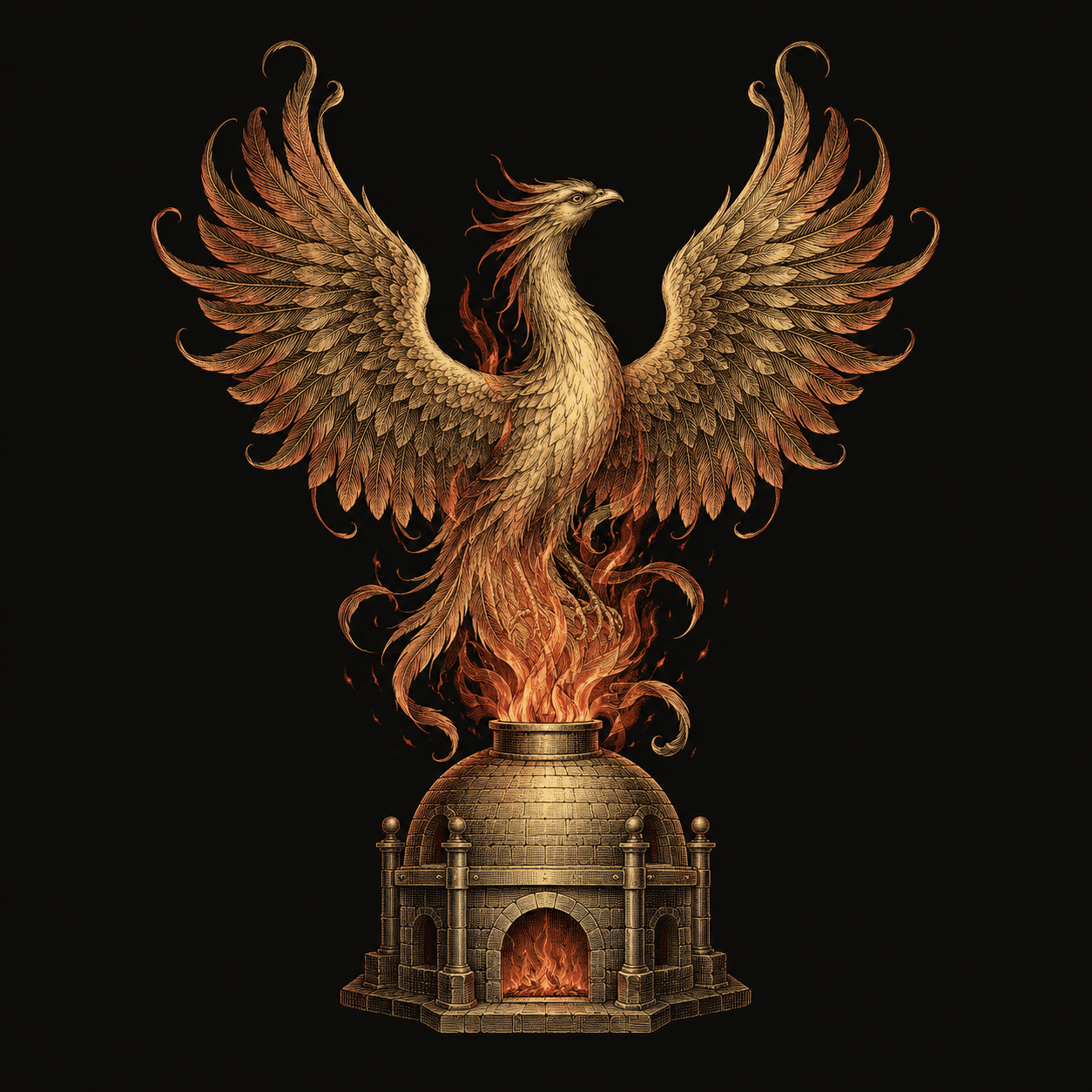
This is why the phoenix belongs at the entrance: it gives the proposal an image of renewal. It is an original emblem for this page, not an object claimed to have stood in Raimondo’s chapel.
Transfiguration → a new beginning
Make another passageThe proposed synthesis
The architecture holds the Work.
The visitor supplies the matter.
Athanor and vessel
An athanor is a furnace that sustains the heat of an alchemical operation; the vessel contains its matter. The title combines these related analogies: the chapel contains the encounter and sustains the attention through which it unfolds.
Experience and interpretation
Light, scale, material illusion, movement and symbolism can shape an encounter. Here “operative” means an environment that acts upon attention. It does not establish a magical mechanism or a guaranteed psychological effect.
A shared history, a particular proposal
Initiatory and regenerative readings have clear precedents. The specific chapel–visitor–Azoth synthesis remains this project’s proposal; the source audit has not established its priority. A fuller study will test it against earlier work and primary sources.
A personal point of departure
After Sansevero
“After passing through the chapel, I felt differently configured.”
My visit became associated with a period of personal transformation. That experience motivates this inquiry; it cannot prove Raimondo’s intentions. The question I want to pursue is how a place, its images and a receptive observer can enter into a relation that persists after the encounter.
Keeping the layers visible
What this reading must account for
A changing arrangement
The Veiled Christ’s projected underground setting differs from today’s encounter. The Anatomical Machines were originally in Raimondo’s palace and entered the chapel later; they are not used here as his documented final station. [5] [9]
Several kinds of meaning
Christian resurrection, family remembrance, moral virtue and Hermetic comparison can coexist. One interpretive vocabulary does not cancel the others. An initiatory reading also does not establish that Masonic ceremonies occurred here.
A later vocabulary
Lévi writes in the nineteenth century, after Raimondo. His language can illuminate a comparison; it cannot be treated as a source Raimondo used. Nor have we established a direct transmission from Pernety to the prince. [8] [10]
The source trail
Notes for an unfolding study
This page introduces the thesis. Historical claims, published interpretations and the author’s proposed connections are distinguished above. The larger study will examine the older literature directly before advancing a stronger originality claim.
- Museo Cappella Sansevero, “The iconographic design.” Institutional interpretation of the integrated program and initiatory significance. For experiential precedent, see Andrea Maraschi, “Raimondo di Sangro, la palingenesi e nuove prospettive di ricerca” (2024), pp. 379–397, especially p. 384, in Partenope degli spiriti.
- Gianluca Forgione, “Pudicizia,” scientific catalogue no. 6 (2025). Compare the museum’s public interpretation. Maternal dedication and iconographic alternatives.
- Gianluca Forgione, “Disinganno,” scientific catalogue no. 26 (2025). Familial, Christian and iconographic contexts.
- Gianluca Forgione, “Pavimento labirintico,” scientific catalogue no. 23 (2025). The pavement’s form, classical source and changing history.
- Gianluca Forgione, “Cristo velato,” scientific catalogue no. 5 (2025). The unrealized lifetime project and evidence for later temporary underground display.
- Carlos Lozano Guillem, “Raimondo di Sangro y el significado de la Cappella Sansevero,” Abaton 1 (2023), pp. 119–130. Alchemical death and regeneration, drawing on Maresca and Vaccaro’s 1975 study. That earlier original remains to be read directly for this project.
- Luigi Coiro, “Sincerità,” scientific catalogue no. 25 (2025). Caduceus and earlier interpretive readings. Compare the museum’s Hermetic account.
- Antoine-Joseph Pernety, Dictionnaire mytho-hermétique (1758), entries “Athanor” and “Azoth.” Period terminology, not evidence of Raimondo’s use of this book. Definitions vary across alchemical authors.
- Eleonora Loiodice, “Macchine anatomiche,” scientific catalogue no. 29 (2025). Original palace setting and later chapel display.
- Éliphas Lévi, Transcendental Magic, trans. A. E. Waite (1896). Azot, p. 16; the inward Great Work, pp. 106–107; the body as athanor, p. 188. A later comparative source.
A small Hermetic glossary
- Athanor
- An alchemical furnace associated with sustained heating; distinct from the vessel placed within it.
- Materia prima
- “First matter.” Its meaning varies by author. Here it names the visitor’s starting condition by analogy.
- Azoth / Mercurius
- Terms associated, in differing traditions, with philosophical Mercury and transformative mediation. They do not reduce to ordinary elemental mercury.
- Solve / coagula
- Dissolve / coagulate. Used here as a comparison for loosening and re-forming configurations.
- Mortificatio
- Mortification or death within the imagery and operations of the Work. Its application to the sculpture is interpretive.
- Transfiguration
- On this page, a renewed way of perceiving; not a measured biological or physical change.
Image credits and reuse
Phoenix and athanor: original AI-generated emblem commissioned for The Phoenix Cabinet (2026). A contemporary illustration, not an archival artifact. Diagrams: original conceptual graphics for this thesis.
La Pudicizia: unknown engraver, 1894, after Antonio Corradini. Il Disinganno: Richard Brend’amour (1831–1915), 1894, after Francesco Queirolo. Both from Gustavo Strafforello, La patria, geografia dell’Italia, Parte Quarta – Italia Meridionale, Napoli (Torino: Unione Tipografico-Editrice, 1894).
Both woodcuts are identified as public domain on Wikimedia Commons. Original files are reproduced without alteration and scaled for display. These are nineteenth-century representations, not photographs of the current installation.
The inquiry remains open